By Beth Soltzberg, Program Coordinator, Jewish Family & Children’s Services
“After he was diagnosed, all of our friends disappeared.” These were the words of a guest at Jewish Family & Children’s Service (JF&CS)’ Memory Café about her husband’s diagnosis with Alzheimer’s. We have heard variations on this statement many times from participants in our Alzheimer’s Family Support Program and our Parkinson’s Family Support Program. As the new video by the Tufts Health Plan Foundation, Ethos AgeWell West Roxbury, ITNGreaterBoston, and Mystic Valley Elder Services states so eloquently, social isolation is “the most significant risk factor for people as they age.” I’m quoting Dale Mitchell, the executive director of Ethos, whose statement opens the video.
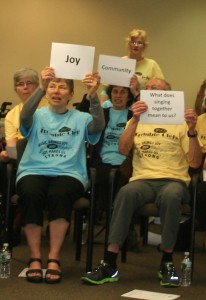
People living with degenerative neurocognitive disorders such as Alzheimer’s, Parkinson’s, or the many other diseases that can cause dementia are at particular risk for social isolation. This is due to stigma as well as the sheer difficulty in managing day-to-day tasks. We have found that the care partners of these individuals often become isolated in tandem.
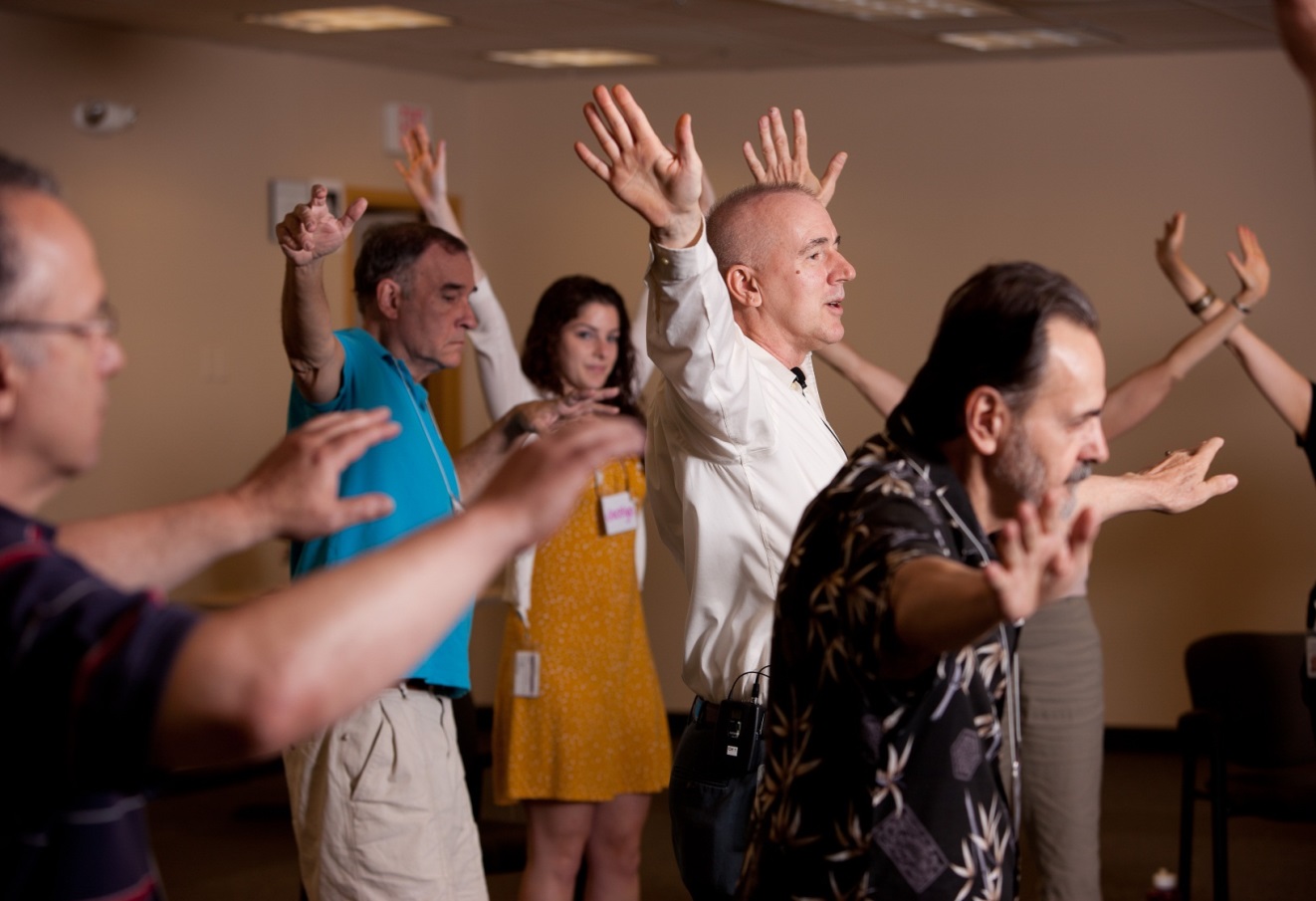
For all of these reasons, we have been keen to identify what it is about our arts-based programs, including the Memory Café, Parkinson’s Dance, and the Tremble Clefs choral group, that meld a roomful of people, many with advanced disease, into a warm, laughing, sharing, connected community.
I recently attended the National Center for Creative Aging conference in Washington, D.C., with Nancy Mazonson, director of the JF&CS Parkinson’s Family Support Program, and we honed in on the answer to this question through exchanges with many teaching artists and health professionals. Arts (including dance, music, visual arts, theater, etc.) are expressions of our fundamental humanity. The need to create and the ability to respond to others’ creations set people apart from other animals. And while chronic illness – neurological impairment in particular – can cloud others’ perceptions of someone’s humanity, when this person creates art, their humanity shines through again.
Take a roomful of people and ask them to do some art together. There will be nervous shuffling, as much from the care partners as the people with a diagnosis. Then, if the artist/facilitator sets an absolutely playful, dignified, accepting tone, they will in fact create. And suddenly the barriers between them will drop away. They will see each other, and themselves, as the quirky, unique, human beings that they are.
These moments of connection don’t always translate into the formation of new relationships outside of the programs, although sometimes they do. But at least they provide reminders that one is part of a web of humanity, and that connection is possible. For me, these moments remind me that the arts are our birthright as humans and can link us when other capacities fail.